
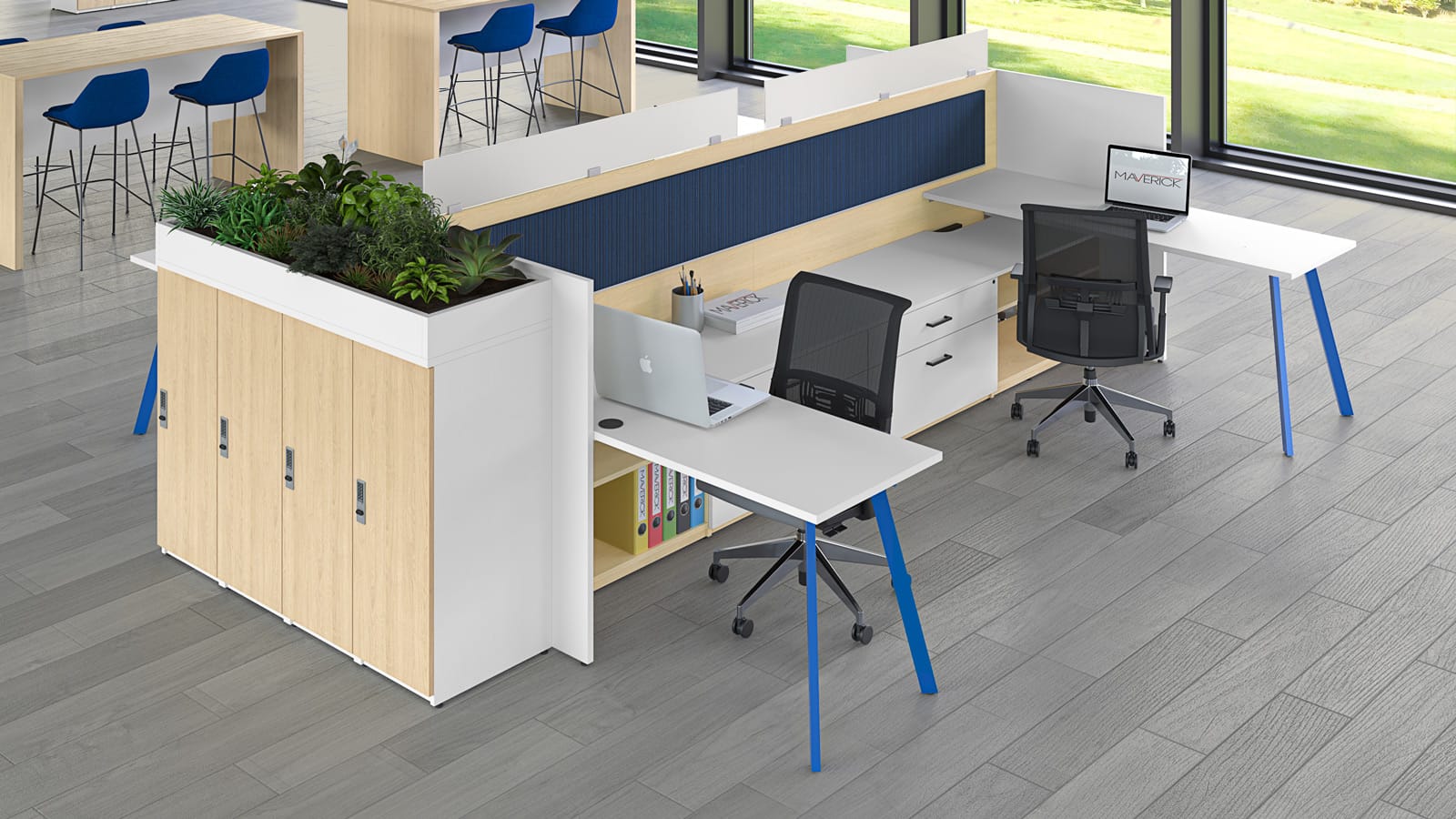
Most office furniture mistakes happen before anyone opens a catalog.
The wrong desk gets bought because nobody measured. The wrong chair gets bought because it looked good in a photo. The whole order shows up three weeks late because nobody asked about lead time. None of that is a product problem. It is a process problem, and the fix takes an afternoon.
Here are the three things to work through before you spend a dollar, plus a fourth that almost nobody mentions.
1. Start With What the Work Actually Requires
Furniture is a tool. Before you shop for tools, write down the job.
Walk your floor and answer these:
How many people sit here today, and how many in three years? Buying for today's headcount is the most common and most expensive mistake in this business.
What does each person actually do at the desk? Two monitors and a phone are a different desk than one laptop. Anyone who spreads out drawings, contracts, or plans needs depth that a standard 24-inch desk does not have.
Who needs privacy, and what kind? Visual privacy and sound privacy are different problems with different products. Be specific.
What are the real dimensions? Measure the room, the door you have to carry furniture through, the elevator, and the ceiling height. Measure twice. A workstation that does not fit the freight elevator is a workstation you pay to ship back.
Where is the power and data? Outlet and drop locations dictate desk placement more than anyone expects.
Then ask your team. Not a survey, a conversation. The people doing the work know which chair hurts, which desk is too small, and where the bottleneck is. They will tell you in five minutes what would take you a month to notice.
Write the answers down. That page is your spec, and it will save you from being sold something you did not need.
2. Put Practicality Ahead of Looks
A beautiful chair that nobody can sit in for six hours is an expensive way to lose productivity. Looks matter, and they matter second.
Buy commercial grade, not residential. This is the single biggest quality divider in furniture, and it is invisible in a photograph. Commercial furniture is tested to ANSI/BIFMA standards for durability, stability, and strength. It is built for eight hours a day, five days a week, for a decade or more. Residential furniture from a big-box store is built for a home office used a few hours a week. Put it in a real office, and it fails in a year.
On chairs, check four things. Adjustable seat height. Adjustable lumbar support, because a fixed back fits exactly one spine. Adjustable arms that tuck under the desk. And the weight rating, since standard chairs top out around 250 pounds while big-and-tall models run to 400 or more. Buy for the person, not for the average.
On work surfaces, check the edge. High-pressure laminate with a T-mold or 3mm PVC edge band survives carts, chairs, and years. A thin taped edge chips the first month and never looks right again. Look at the corners of any surface you are considering, because that is where furniture fails first.
Ask for the warranty in writing. Commercial manufacturers routinely warrant seating and casegoods for ten years or more, and some go to lifetime on the frame. A one-year warranty tells you what the manufacturer expects.
Then, and only then, pick the finish. Browse our product finishes and our ergonomic seating once you know the specs you need.
3. Test Drive It, Especially If It Is Used
Nobody buys a truck from a photo. Do not buy forty chairs from one either.
Sit in the chair for more than ten seconds. Adjust everything. Get up and sit back down. If you are buying for a team, bring two or three people of different heights and let them all try it, because the chair that fits you may not fit your estimator.
Used commercial furniture is often the best value in this business, and it rewards inspection. Here is what to check:
On a used chair: sit and wait thirty seconds to confirm the cylinder holds its height rather than sinking. Work the tilt tension. Adjust the arms through their full range. Roll it. Look for tears at the front edge of the seat, which is where wear shows first.
On a used desk or work surface: run your hand along the edge band for lifting or chipping. Check the corners for delamination. Open and close every drawer. Confirm the grommets are present if you need cable access.
On used files and storage: ask for the keys. Locks without keys are common on used product, and rekeying costs money. Check that the drawer interlock works, meaning only one drawer opens at a time, because a file cabinet with three drawers open tips over.
On used cubicles: confirm the connectors, hardware, and trim are included, not just the panels. Panels without connecting hardware are scrap. Also confirm the panel heights and whether the system carries power, because matching an existing system after the fact is difficult and sometimes impossible.
Come see what is on our floor. Browse used office furniture, used office chairs, used desks, and used cubicles, or check the current specials, which move fastest.
The Fourth Thing: Get the Order of Operations Right
This is the one that costs people money, and it is not on anybody's list.
Buy in this sequence:
Measure the space. Room dimensions, door widths, elevator, ceiling, power and data locations.
Draw the layout. Place everything to scale, with real clearances, before you pick a single product.
Spec the products. Now you know what sizes fit, so now you can shop.
Confirm lead times. New furniture ordered from a manufacturer commonly takes weeks. In-stock used and refurbished product ships in days. If you have a move-in date, this step determines what you can actually buy.
Schedule delivery and installation. Confirm who carries it in, who assembles it, who hauls the boxes away, and who handles the old furniture.
People do this backward constantly. They fall in love with a desk, order it, and then discover the room holds six of them instead of eight. Capital Choice gives you a free 3D drawing of your layout before you buy, which is step two done properly and at no cost. Our office design team handles it.
New, Used, or Both
You do not have to pick one. Most of our clients mix, and the logic is simple.
Buy used or refurbished for files, storage, cubicles, conference tables, and anything where a commercial-grade frame at a fraction of new pricing is the whole point. These items were built for fifteen years of use and often have most of that left.
Buy new where fit matters to an individual body or where you need an exact match across a growing team. Task seating is the usual case, since adjustment range and warranty matter more there than anywhere else.
Put the money where people touch it eight hours a day, and save it on the things that sit there.
Five Questions to Ask Any Dealer Before You Buy
What is the lead time on this, in writing?
Is delivery and installation included, and who manages the install from start to finish?
What is the warranty, and who handles a claim?
Will this product line still be available in three years when I add people?
What happens to my old furniture?
That last one catches people. A furniture purchase usually creates a disposal problem. We decommission offices through one vendor, reselling, donating, and recycling, and we buy used office furniture depending on quality, quantity, and current demand. Ask about that on the front end, because it can offset part of what you are spending.
Buy It Once, Buy It Right
Tell us how many people, what they do, and when you need it. We will measure, draw your layout in 3D for free, and quote new, used, or a mix. We keep a stocked warehouse in Columbus, so a lot of what you need ships in days rather than on a factory lead time, and our own crew delivers and installs it.
Call (614) 332-1828 or request a quote. Visit us at 1517 Alum Industrial Dr N, Columbus, OH 43209, weekdays 9 to 5, just east of downtown off Alum Creek Drive across from Bridgeway Academy. New to the terminology? Start with our furniture definitions guide.
Frequently Asked Questions
What should I consider first when buying office furniture?
Start with the work, not the product. Count your headcount today and in three years, list what each person does at the desk, identify who needs privacy and what kind, and measure the room, doorways, and elevator. Write it down. That page becomes your spec and keeps you from being sold something you do not need.
What is the difference between commercial and residential office furniture?
Commercial furniture is tested to ANSI/BIFMA standards for durability, stability, and strength, and it is built for eight hours a day over a decade or more. Residential furniture is built for a home office used a few hours a week. The difference is invisible in a photo and obvious after a year of real use.
How do I inspect used office furniture before buying?
On chairs, sit for thirty seconds to confirm the cylinder holds height, then work the tilt, arms, and casters. On desks, check the edge banding and corners for chipping or delamination. On files, ask for the keys and confirm the drawer interlock works. On cubicles, confirm connectors and hardware are included, not just panels.
Should I buy new or used office furniture?
Mix them. Buy used or refurbished for files, storage, cubicles, and conference tables, where a commercial-grade frame at a fraction of new pricing is the whole point. Buy new for task seating, where adjustment range, fit to an individual body, and warranty matter most.
How long does it take to get office furniture?
New furniture ordered from a manufacturer commonly takes several weeks. In-stock used and refurbished furniture ships in days. Capital Choice keeps a stocked warehouse in Columbus, so if you have a firm move-in date, confirm lead times before you fall in love with a product.
What questions should I ask an office furniture dealer?
Ask for the lead time in writing, whether delivery and installation are included and who performs them, what the warranty covers and who handles claims, whether the product line will still be available in three years, and what happens to your old furniture.
Have a question this did not answer?
Call 614.332.1828 and ask a person. We have been doing this for twenty years and we will give you a straight answer.