
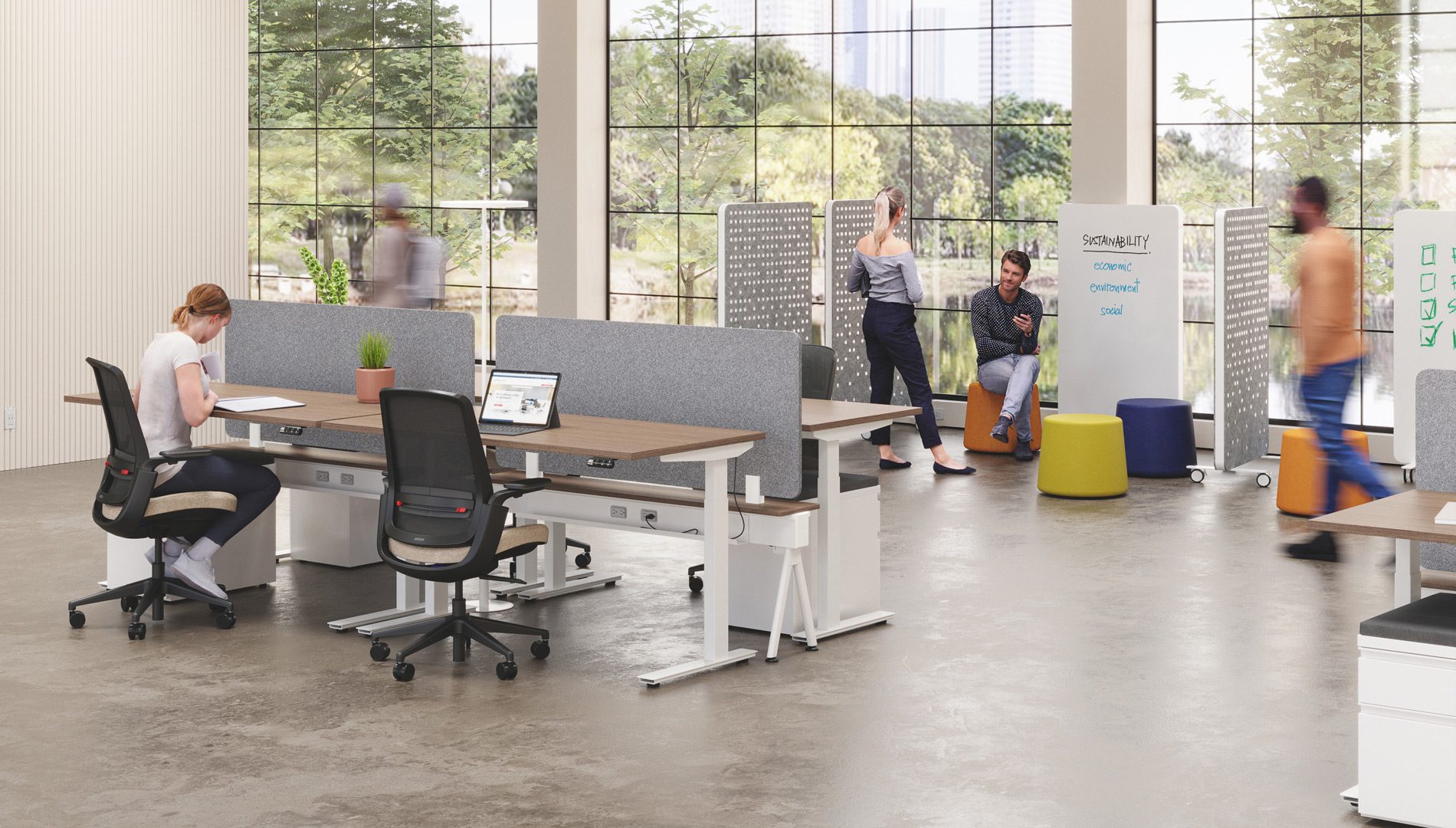
Now that we’ve made it to the new year, architects, interior designers, and business leaders are rethinking the very essence of the modern office. It’s no longer just about desks and chairs; it’s about creating environments that foster productivity, prioritize employee well-being, and adapt to the evolving needs of a dynamic workforce. The convergence of ergonomic design, sustainable practices, and smart technology is revolutionizing office spaces. Are you ready to design a workspace that empowers your team and drives success? Let’s explore the key trends shaping ergonomic office design in 2026.
The Compelling Business Case for Ergonomic Design
Investing in ergonomic office furniture isn’t just a feel-good initiative; it’s a strategic business imperative. Studies show that ergonomic interventions can reduce absenteeism by up to 67% and increase productivity by 15%, generating between three and six dollars in cost savings for every dollar invested. The American Journal of Public Health found a 67 percent decrease in absenteeism due to musculoskeletal disorders in companies investing in ergonomic office furniture. Furthermore, organizations providing ergonomic workstations experienced a 24 percent increase in employee satisfaction.
Consider this: Gallup’s 2024 research reveals that only 30% of U.S. employees are engaged at work, the lowest engagement levels since 2013. Disengaged workers are 18% less productive, costing the global economy trillions annually. Ergonomic design investments directly address this crisis by creating environments that inspire engagement and sustain productivity. As organizations compete for talent, prioritizing employee well-being through ergonomic solutions becomes a powerful differentiator.
Ergonomic Design Principles and Dynamic Workstations
Ergonomic design is about fitting the workplace to the worker, not the other way around. The foundation of this approach is the dynamic workstation, which allows employees to customize their environment.
Height-adjustable desks are a game-changer. Texas A&M University research shows that lower back discomfort drops significantly when workers use stand-biased desks. A study published in the NIH found that after three months, the intervention group significantly decreased sitting time at work and had reduced neck and shoulder pain. Encourage employees to alternate between sitting and standing throughout the day, perhaps sitting during the morning and standing in the afternoon. Phys.org identified a “sweet spot” sit-stand ratio that significantly reduces lower back pain while maintaining productivity.
Ergonomic chairs are equally crucial. Look for ergonomic chairs with adjustable seat height, backrest angle, lumbar support, armrest position, and recline tension. Premium options offer advanced adjustability for ultimate comfort and spine health.
Don’t forget ergonomic accessories! Ergonomic keyboards and mice, monitor stands, footrests, and keyboard trays all contribute to a comfortable and healthy workspace.
Comprehensive Ergonomic Assessment Programs
Effective ergonomic design requires a systematic assessment of employee needs. The State of Ohio’s Bureau of Workers’ Compensation provides valuable resources and consultation services to help employers implement effective ergonomics programs.
Start by observing work postures, repetitive movements, and environmental factors. Conduct employee surveys about pain, discomfort, and fatigue. Remember that ergonomic needs vary among diverse worker populations. Provide training on proper desk height, monitor positioning, and the importance of regular breaks. Measure and track outcomes, focusing on health outcomes, productivity metrics, and engagement measures.
Sustainable and Modular Office Design Systems
Sustainability and ergonomics go hand in hand. Sustainable office design encompasses responsible material sourcing, durability, modular systems, and energy-efficient features.
Modular office furniture systems offer unprecedented flexibility. Benching systems promote collaboration while maintaining integrated power solutions and storage options. Flexible space solutions, including coworking and modular layouts, can reduce occupancy costs by 20-30%. Eco-friendly materials like responsibly sourced wood and recycled plastics reduce environmental impact. Bamboo and reclaimed wood furniture offer stylish, sustainable alternatives.
Wellness-Driven Design and Health-Focused Office Environments
Wellness-centric office design creates holistic environments supporting physical, mental, and emotional well-being.
Natural light is a powerful wellness element. Maximize daylight penetration by keeping panel heights low, positioning frequently used areas near windows, and using glass partitions.
Air quality is critical. Use HEPA filters, CO2 sensors, and humidity control systems to create healthier indoor environments.
Biophilic design, incorporating natural elements, can improve productivity by 6% and creativity by up to 15%. Living walls, plants, water features, and natural wood finishes create calming atmospheres.
Don’t forget mental health support spaces like mindfulness rooms and meditation spaces.
Smart Technology Integration and the Internet of Things
Smart office technology optimizes operations while enhancing employee experiences.
IoT sensors generate real-time data about occupancy patterns, space utilization, temperature preferences, and air quality levels. Companies like Google and Cisco have pioneered comprehensive IoT implementations.
Smart environmental controls allow remote operation of climate control systems and automated lighting adjustments.
Space utilization monitoring provides insights into how office spaces are being used, enabling data-driven decisions about space allocation.
Hybrid Work Models and Digital Native Expectations
Hybrid work is here to stay. Design offices as hubs for collaboration, connection, and mentorship. Digital natives expect always-on tools facilitating real-time chat and seamless remote collaboration. Gen Z values face-to-face interaction and community, preferring hybrid arrangements over fully remote work. Flexible work improves employee well-being and retention.
Acoustic Solutions and Environmental Control

Strategic acoustic design transforms open offices into functional spaces supporting both collaboration and focused work.
Sound absorption materials reduce echoes and reverberation.
Sound insulation prevents noise transmission between workstations.
Activity-based zoning designates specific areas for different activity types.
Sound masking systems emit soft background noise that reduces the intelligibility of.
Architectural Walls and Flexible Space Configuration Systems
Demountable and removable wall systems offer architectural flexibility previously unavailable without major renovation.
Inclusive and Neurodiversity-Conscious Office Design
Inclusive design supports diverse needs, creating workplaces where all employees can perform optimally. Neurodiversity-friendly design recognizes that sensory experiences affect different individuals differently. Gender-inclusive design addresses women’s specific needs, including temperature control, nursing rooms, and restroom design.
Conclusion: Design Your Future-Ready Workspace
As we look deeper into 2026, the modern office is evolving into a dynamic, human-centric environment. By embracing ergonomic principles, sustainable practices, smart technology, and inclusive design, you can create a workspace that not only enhances productivity but also fosters employee well-being and attracts top talent.
Ready to transform your office? Contact us today for a consultation and let Capital Choice Office Furniture help you design a future-ready workspace that empowers your team and drives your organization’s success.